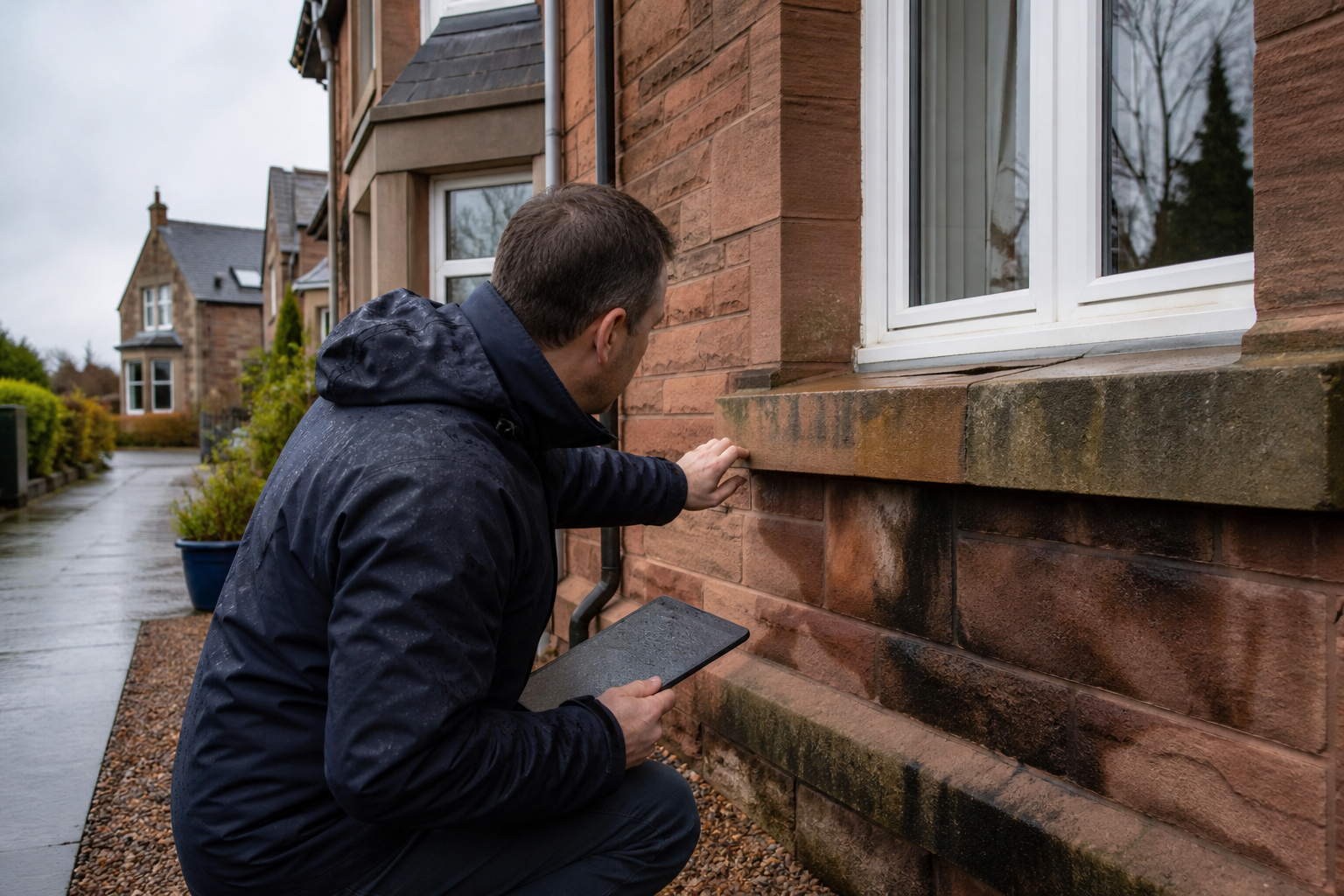
Dry Rot Treatment Scotland: How to Tell Dry Rot from Woodworm

If you are searching for dry rot treatment Scotland, there is a good chance you have already seen something worrying: crumbling skirtings, springy floors, small holes in timber, or a musty smell you cannot quite place. The difficulty is that visible timber damage does not always tell you the full story. What looks like dry rot could be woodworm. What looks like woodworm could be historic insect damage with a separate damp problem driving decay.
In Scottish properties, especially older homes with suspended timber floors, roof timbers and hidden voids, misdiagnosis is common. At JDN Property Services Ltd, we take a survey-led, evidence-based approach so you can understand what is actually happening before any treatment is recommended. That matters, because the right repair starts with the right diagnosis.
Why dry rot and woodworm are often confused
Dry rot and woodworm both affect timber, both can stay hidden for a long time, and both often come to light only after the damage has become visible around skirtings, floorboards, joist ends or loft spaces.
They are also linked to the kinds of issues we regularly see in Scotland: older building stock, past leaks, poor ventilation in subfloors, damp masonry, and repairs that have covered over symptoms without dealing with the cause. From a homeowner or landlord's point of view, the early warning signs can look frustratingly similar.
The important thing to remember is this: dry rot is a fungal decay problem, while woodworm is caused by wood-boring insects. They are different defects, they behave differently, and they are not treated in the same way.
Dry rot treatment Scotland: what dry rot usually looks like
Signs that may point to dry rot
Timber that feels dry, brittle, shrunken or breaks into cube-like pieces.
Skirtings, floorboards or joists that have lost strength and no longer feel sound.
A grey or white fungal growth on affected areas.
Orange or rust-coloured spore dust in more advanced cases.
A persistent musty smell, especially in enclosed voids or under floors.
Damage associated with a moisture source such as a leak, damp wall, defective ventilation or a wet subfloor.
One reason dry rot causes concern is that once it becomes established, it can spread beyond the exact point where the moisture problem started. That is why a proper survey matters. Simply cutting out one visibly damaged board or repainting over the area rarely deals with the wider issue.
Dry rot usually has a moisture story behind it
Despite the name, dry rot does not start in genuinely dry conditions. There is usually a history of dampness somewhere in the building fabric. That might be defective plumbing, water ingress, poor subfloor ventilation, condensation in an enclosed void, or long-term dampness affecting nearby masonry and timber.
For that reason, lasting dry rot control is not just about treating timber. It is about identifying the source of moisture, understanding the extent of the decay, and setting out practical remedial steps in the right order.
What active woodworm usually looks like
Signs that may suggest woodworm activity
Small round exit holes in the timber surface.
Fine bore dust, often called frass, around holes or on nearby surfaces.
Localised weakening of floorboards, roof timbers, skirtings or joinery.
Damage that may be concentrated in certain pieces of timber rather than spreading like fungal decay.
Evidence found in loft timbers, under floors, around older furniture-grade wood or in areas with a history of dampness.
Woodworm treatment in Scotland should never be recommended on holes alone. Many older properties contain historic woodworm damage that is no longer active. In other words, the holes may still be there, but the infestation may not be.
Why old woodworm holes can mislead property owners
This is a common source of confusion. A buyer lifts a rug or notices holes in a floorboard and immediately assumes active infestation. Sometimes that is correct, but very often the more important questions are these: Is the attack current or historic? Is the timber structurally affected? Is there an underlying damp issue making the timber more vulnerable?
Without that wider assessment, treatment can become guesswork. That is exactly what we aim to avoid.
Dry rot or woodworm? Key differences to look for
Look at the pattern of damage
Dry rot tends to cause timber to lose its structural integrity, crack and become brittle. Woodworm usually leaves visible flight holes and tunnelling within the timber. If the main sign is widespread weakness with fungal growth, dry rot becomes more likely. If the main sign is holes and bore dust, woodworm becomes more likely.
Look at what is around the timber
With dry rot, there is often a wider building defect in the background. That might be damp masonry, poor airflow beneath suspended floors, a plumbing issue, or prolonged moisture in a hidden area. With woodworm, the surrounding area may or may not look damp, although insect attack is often more likely where timber has been vulnerable for some time.
Look at whether the signs seem current
Fresh frass can suggest current woodworm activity. Ongoing softness, active decay and expanding damage can suggest rot. Historic damage is also common in older Scottish buildings, so visible defects should always be assessed in context.
Look at the property as a whole
A single symptom rarely tells the whole story. We often find that the real answer sits in the wider building performance: moisture levels, ventilation, previous repairs, hidden void conditions, and how long the defect has been present. That is why a survey gives more value than a quick visual guess.
When to book a timber survey in Scotland
If you have noticed timber damage but are unsure what is causing it, booking a survey is usually the most sensible next step. It is particularly worth doing in the following situations:
You are buying an older property and the Home Report has raised damp or timber concerns.
Skirtings, joists or floorboards feel soft, fragile or unstable.
You can see fungal growth, unusual cracking or signs of timber shrinkage.
You have noticed woodworm holes with fresh-looking dust nearby.
There has been a leak, flood event or long-term water ingress.
A damp patch keeps returning and nearby timber is beginning to deteriorate.
You are a landlord, managing agent or insurer and need clear written findings before arranging remedial works.
Acting early does not mean assuming the worst. It means getting clarity before damage spreads further or the wrong repair is carried out.
Our survey-first approach at JDN Property Services Ltd
At JDN Property Services Ltd, every instruction begins with a survey carried out by an experienced surveyor. Based in Wishaw, we work throughout Glasgow, Edinburgh and beyond the Central Belt, helping property owners, landlords and managing agents make informed decisions about timber defects and damp-related issues.
Our approach is designed to give you practical answers, not guesswork. A timber survey can help establish:
Whether the issue is dry rot, woodworm, another form of timber decay, or something else entirely.
What is causing the problem, including any moisture source that needs to be addressed.
The likely extent and urgency of the defect.
What remedial works are actually necessary and what can be avoided.
The next steps for repair, control and reinstatement.
You can learn more about our timber and damp survey services and our wider property preservation work on our website. Where dampness is part of the problem, our damp proofing services may also form part of the recommended repair strategy once the cause has been confirmed.
Where required, our written reports are suitable for submission to insurers, loss adjusters, landlords and managing agents. If treatment or repairs are needed, our in-house teams can carry out specialist remedial and reinstatement works, helping to keep the process joined up from diagnosis through to completion.
Why diagnosis matters more than assumptions
Property owners sometimes feel pressure to move straight to treatment because the signs look urgent. In reality, the better decision is often to slow down long enough to get the diagnosis right.
Not every weakened floor is dry rot. Not every hole is active woodworm. Not every musty smell is a timber infestation. A survey can prevent unnecessary work, highlight hidden risks, and make sure any recommended repair is proportionate to the actual defect.
That survey-first mindset is central to how we work. It is also why many clients come to us when they want evidence-based advice rather than a one-size-fits-all answer.
Frequently asked questions
What is the main difference between dry rot and woodworm?
Dry rot is a fungal decay problem that breaks down timber when moisture conditions allow it to develop. Woodworm refers to damage caused by wood-boring insects. The signs, causes and treatments are different, which is why proper identification matters.
Do woodworm holes always mean there is an active infestation?
No. Many Scottish properties contain historic woodworm holes that are no longer active. Fresh frass or ongoing timber deterioration may suggest current activity, but confirmation should come from a professional timber survey.
What causes dry rot in Scottish homes?
Dry rot is usually linked to a moisture problem somewhere in the building. Common examples include water ingress, plumbing leaks, damp masonry, poor subfloor ventilation and long-term hidden dampness. Lasting dry rot treatment depends on addressing that underlying cause as well as the affected timber.
When should I book a timber survey before buying a property?
If a Home Report mentions damp, timber decay, wood-boring insects, musty smells, damaged floors or suspicious skirtings, it is sensible to arrange a survey before you commit. A clear report can help you understand risk, cost and urgency before purchase.
Can JDN Property Services Ltd help with both surveys and remedial works?
Yes. We begin with a survey and written report, then where remedial works are required, our in-house teams can carry out the recommended repairs. You can also view our services and contact details through our main website.
Conclusion
If you are trying to work out whether you are dealing with dry rot or woodworm, the safest next step is not guesswork. It is a clear, professional assessment of the timber, the moisture conditions around it, and the likely cause of the damage.
Concerned about decaying or infested timber? Book a timber and damp survey with JDN Property Services Ltd for clear findings and practical next steps. Call us on 01698 609001, email info@jdnpropertyservices.co.uk, or visit JDN Property Services Ltd to arrange a survey.